Tu locura es mi ciencia.
Your madness is my science.
For a long time, I could not decide whether to speak or remain silent about the moral dilemma that lies at the very heart of my novel, The Abyss.
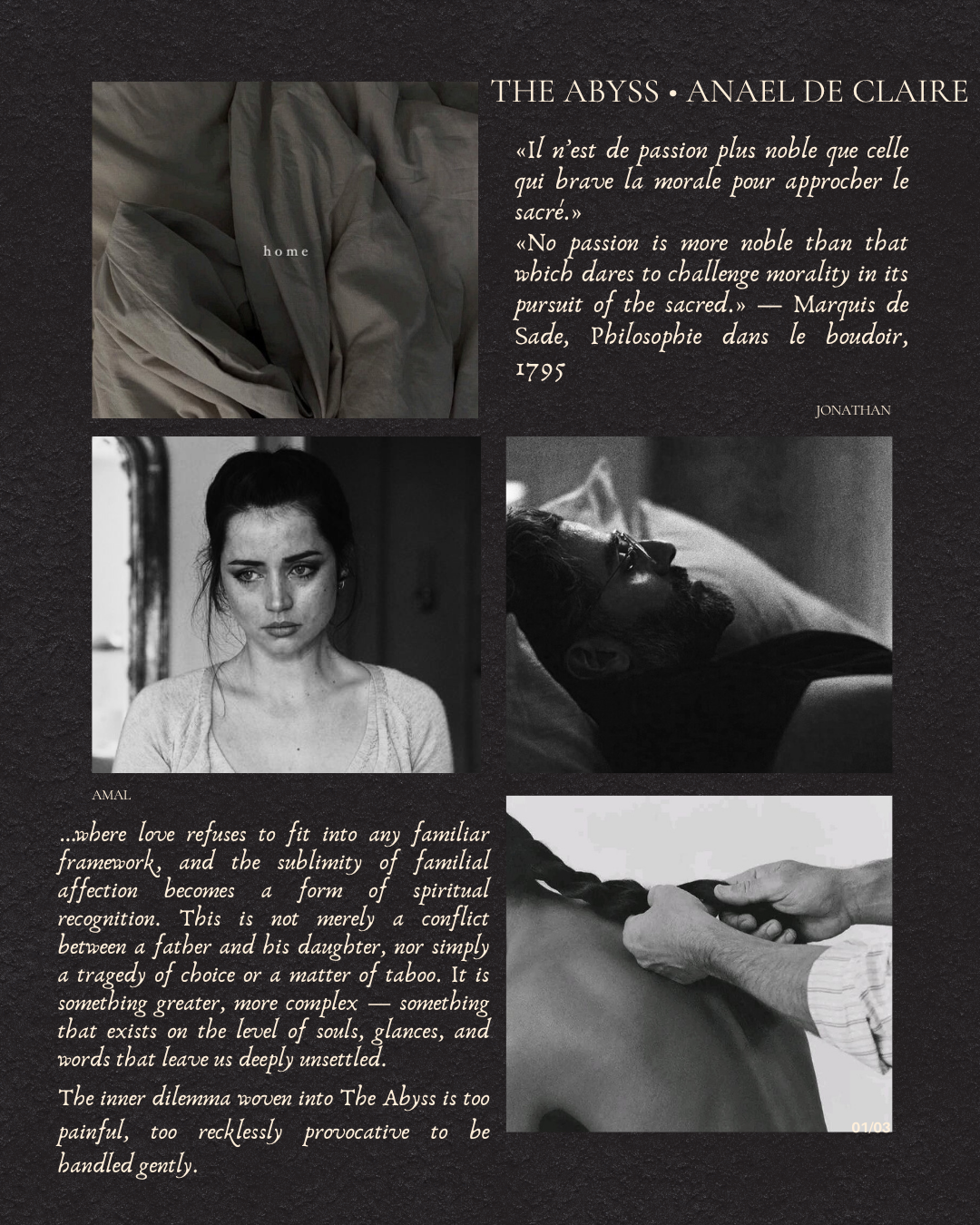
It is delicate. Uncomfortable. It stretches the familiar boundaries of good and evil, leading us into a place where love refuses to conform to moral frameworks, and where the sublimity of familial affection becomes a form of spiritual recognition.
This is not merely the controversial conflict between a father and his daughter, nor simply a tragedy of impossible choices or a story built around taboo. It is something far greater—more intricate, existing on the level of souls, glances, and words that leave us profoundly unsettled. The central dilemma of The Abyss is painfully intimate, unsettlingly provocative, and impossible to approach without discomfort.
It gripped me by the throat like an unfinished kiss, like a gaze you instinctively look away from because it reveals something you are not ready to face. A truth that is sharp, merciless, and strangely adhesive—a truth that draws you into its dark waters. The kind of truth that burns, wounds, and turns your entire world upside down.
Only recently did I realize that The Abyss was becoming frighteningly exposed. Bare to the bone. Not in its language, but in its spirit. Sensual. Defiant. Ultimately impossible to tell in full. It is an irrational, almost metaphysical story in which love resists both morality and explanation. It simply happens—against all reason, and for no reason at all.
Anael De Claire.